
Today’s Briefing

The latest drilling, deal-flow, and regulatory news across the globe

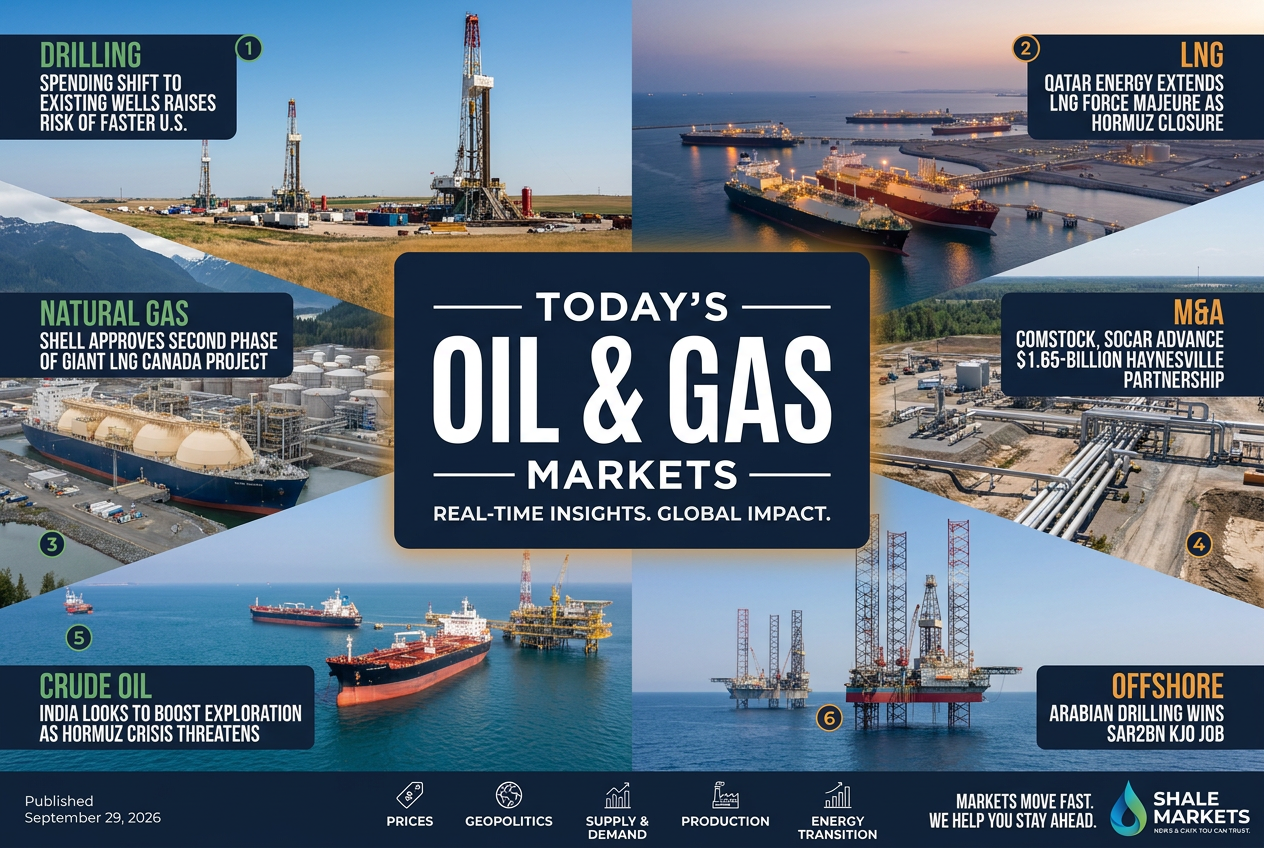
Illustrated summary of the top stories in the Shale Markets Briefing — September 29, 2026 briefing

Wednesday, August 12, 2026

USA Oil, Gas Workforce Hits Lowest Level in Years

A shrinking extraction workforce points to tighter labor availability for drilling and production activity, which can slow execution and raise operating costs if operators need to compete harder for crews and field talent. For executives, it signals that labor may be constraining near-term activity even if commodity fundamentals support continued development.


Alaska’s $55B LNG Mega-Project In Talks With More Buyers Ahead Of FID

This suggests Alaska LNG is moving closer to a final investment decision, which would signal renewed capital willingness for a high-cost export project that has struggled to clear financing hurdles. For gas executives, more buyer commitments would improve the odds of new long-duration demand for North American LNG and increase competitive pressure on other export proposals.
RigZone · 9:37 AM

Venture Global Logs Nearly 50 Percent Revenue Increase

Higher LNG export volumes and revenue signal that global gas demand is still absorbing new US supply, which supports terminal utilization and upstream gas takeaway. For executives, it reinforces the value of securing export capacity and aligning capital with liquefaction-linked cash flow rather than purely domestic gas pricing.
Sponsored
Ray's Gym Tracker

Middle East War Pushes China Toward the Arctic Trade Route

China’s shift toward Arctic shipping signals that geopolitical risk can redirect trade flows away from the Red Sea and Suez corridor, which matters for freight economics and route reliability. For executives, it is a reminder that shipping disruptions can change demand patterns for fuel, marine logistics, and port-linked energy flows well beyond the immediate conflict zone.

Get the daily briefing

Join oil & gas executives who start their day with Shale Markets.

A Dozen Ships Switch Oil Outside Hormuz

The route shift around Hormuz points to a continued effort by shippers to reduce exposure to a critical chokepoint, which matters for supply security and freight costs across the crude market. For executives, it is a reminder that geopolitical risk can quickly alter export flows and pricing power for producers and traders tied to Middle East barrels.

Russia Imports Indian Fuel as Refinery Crisis Deepens

Russia importing gasoline from India signals that domestic fuel availability is strained enough to require long-haul supply swaps, which can pressure regional pricing and reveal cracks in product balance. For executives, it is a reminder that sanctions, refinery outages, and freight logistics are reshaping trade flows and creating openings for nontraditional exporters.
Sponsored
AI-Driven Interactive Websites

Get the daily briefing

Join oil & gas executives who start their day with Shale Markets.

Iran Says Hormuz Will Stay Closed Until U.S. Meets Its Conditions

The Strait of Hormuz is a critical choke point for global crude flows, so any prolonged closure raises the risk of supply disruption and higher freight and insurance costs across the market. For executives, the key signal is that regional risk is being tied to broader political demands, which can delay cargoes, tighten prompt supply, and keep volatility elevated.

Tuesday, August 11, 2026

Anadolu Ajansı · 3:54 PM

Russia’s federal budget deficit climbs over 32% in January-July

A widening Russian budget deficit raises the risk of higher state borrowing, spending restraint, or additional revenue measures, all of which can affect the country’s ability to sustain energy-sector support and war-related fiscal priorities. For oil and gas executives, it signals potential pressure on policy choices, export strategy, and the broader operating environment in a major producer market.
Sponsored
AI-Driven Interactive Websites

Showing 951–975 of 1081