
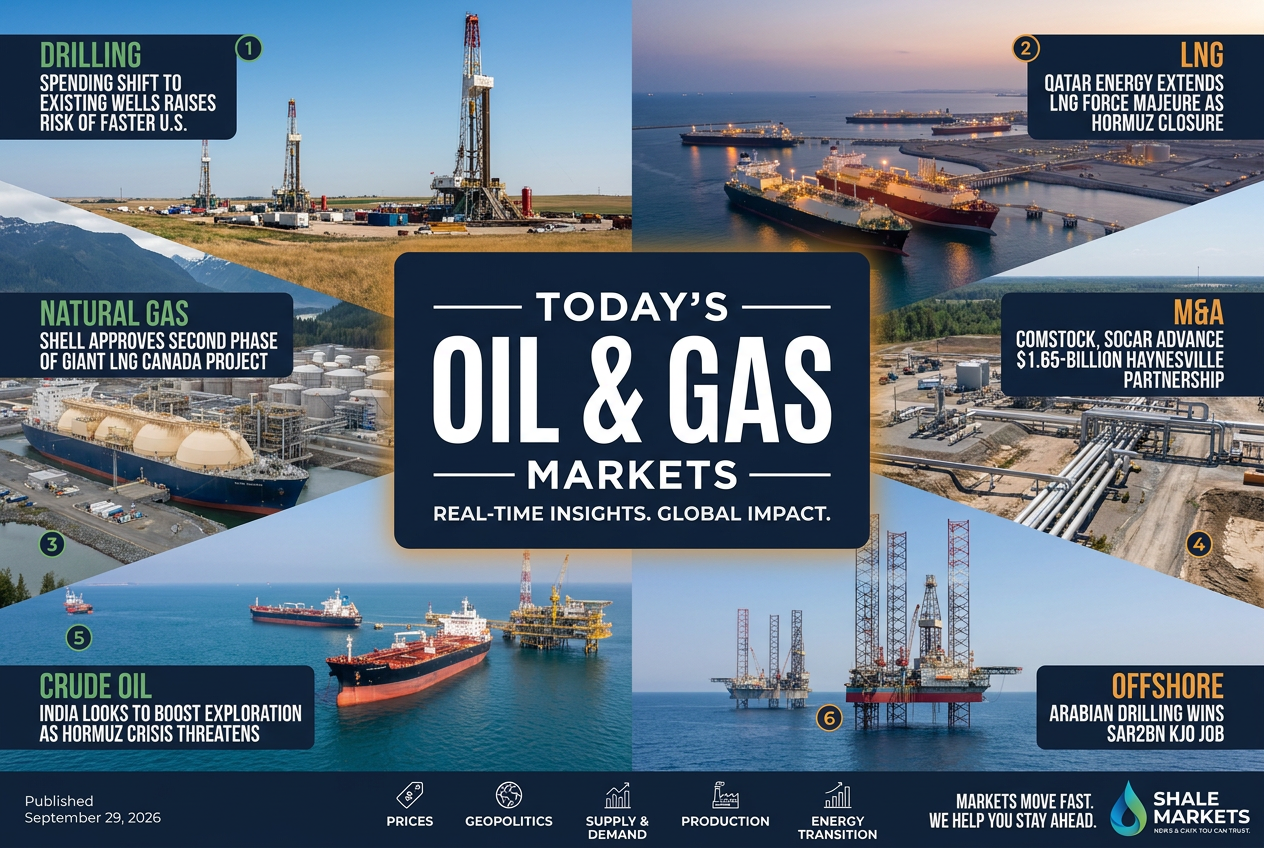
Today’s Briefing

The latest drilling, deal-flow, and regulatory news across the globe

Illustrated summary of the top stories in the Shale Markets Briefing — September 29, 2026 briefing

Tuesday, August 11, 2026

Iraq’s Oil Lifeline Reopens — But Can Baghdad Trust Turkey for Even One Year?

The reopening of Iraq’s export route signals how dependent Baghdad remains on uninterrupted crude flows to fund the state, so any route disruption can quickly turn into production curtailments and fiscal stress. For exporters and traders, the issue is less about a single shipment than about whether Iraq can sustain volume and reliability in a constrained regional logistics environment.

The Hormuz Shock Is Far From Over

Any prolonged disruption in the Strait of Hormuz keeps a geopolitical risk premium embedded in crude and raises delivered-cost uncertainty for refiners, shippers, and buyers across Asia and Europe. For executives, the key signal is that supply-chain normalization can lag any political headline, so procurement and inventory planning may need to stay defensive even if flows resume.
Sponsored
Ray's Gym Tracker

Monday, August 10, 2026

BofA: Hormuz Needs 10 Times More Ships to Stabilize Oil Markets

A prolonged Strait of Hormuz disruption would tighten global crude and refined-product balances, which matters for executives because it can lift feedstock costs, widen regional price dislocations, and reshape trading and inventory strategy. It also signals that capital may stay biased toward supply-security assets such as storage, shipping, and alternative export routes rather than growth projects tied to stable import flows.

Get the daily briefing

Join oil & gas executives who start their day with Shale Markets.

Trump Faces Growing Pressure to Restrict U.S. Oil Exports

Any move to restrict crude and product exports would directly challenge the U.S. shale model, because domestic producers rely on open access to global markets to keep prices aligned with international benchmarks. Even the threat of a ban signals policy risk that could alter basin economics, weigh on midstream and refining flows, and advantage foreign suppliers if U.S. barrels are trapped at home.

USA NatGas Surges

A sharp move in U.S. gas futures signals a tighter near-term supply-demand balance, which can improve realizations for gas-weighted producers and lift hedging value across the sector. It also matters for LNG, storage, and power market exposure because stronger prompt prices can change dispatch economics and basin cash flow expectations.
OilPrice.com · 11:11 AM

Indian Refiners Cut LPG Losses in August

Lower LPG losses at India’s state refiners suggest regulated retail pricing is moving closer to market economics, which can ease pressure on downstream margins and government support needs. For executives, it signals a less punitive operating environment in a key demand market, with implications for refining profitability and policy risk.
Sponsored
AI-Driven Interactive Websites
Business Insider Africa · 11:11 AM

Africa’s 10 biggest new projects attracting billions in investment and the investors backing them

Large project financing in Africa signals where global capital is willing to back long-cycle resource and infrastructure development, which can reshape regional supply and compete for investment that might otherwise flow to North American projects. For executives, it is a read on future basin competition, partner appetite, and the pace at which new barrels, gas, or infrastructure can come online outside the U.S.
EIA Today in Energy · 11:11 AM

Duration of power outages in Puerto Rico not caused by major events increased 19% in 2025

Puerto Rico’s rising outage hours signal continued grid unreliability, which can raise operating risk and captive power costs for industrial users and data-intensive facilities on the island. For executives, it is a reminder that infrastructure weakness can shape demand growth, site selection, and the economics of distributed generation or backup power investment.

Get the daily briefing

Join oil & gas executives who start their day with Shale Markets.

Why Trump’s Waiver of the Jones Act Is Unlikely To Lower Gas Prices

A Jones Act waiver may ease vessel costs at the margin, but it does not address the main drivers of retail gasoline prices, so executives should not expect it to materially change demand or refinery margins. The more important signal is political pressure to intervene in fuel markets, which can affect shipping, refining, and pricing strategy without altering underlying supply balance.
Sponsored
Newsletters Automation & Hosting Platform

Showing 1001–1025 of 1081