Today’s Briefing

The latest drilling, deal-flow, and regulatory news across the globe

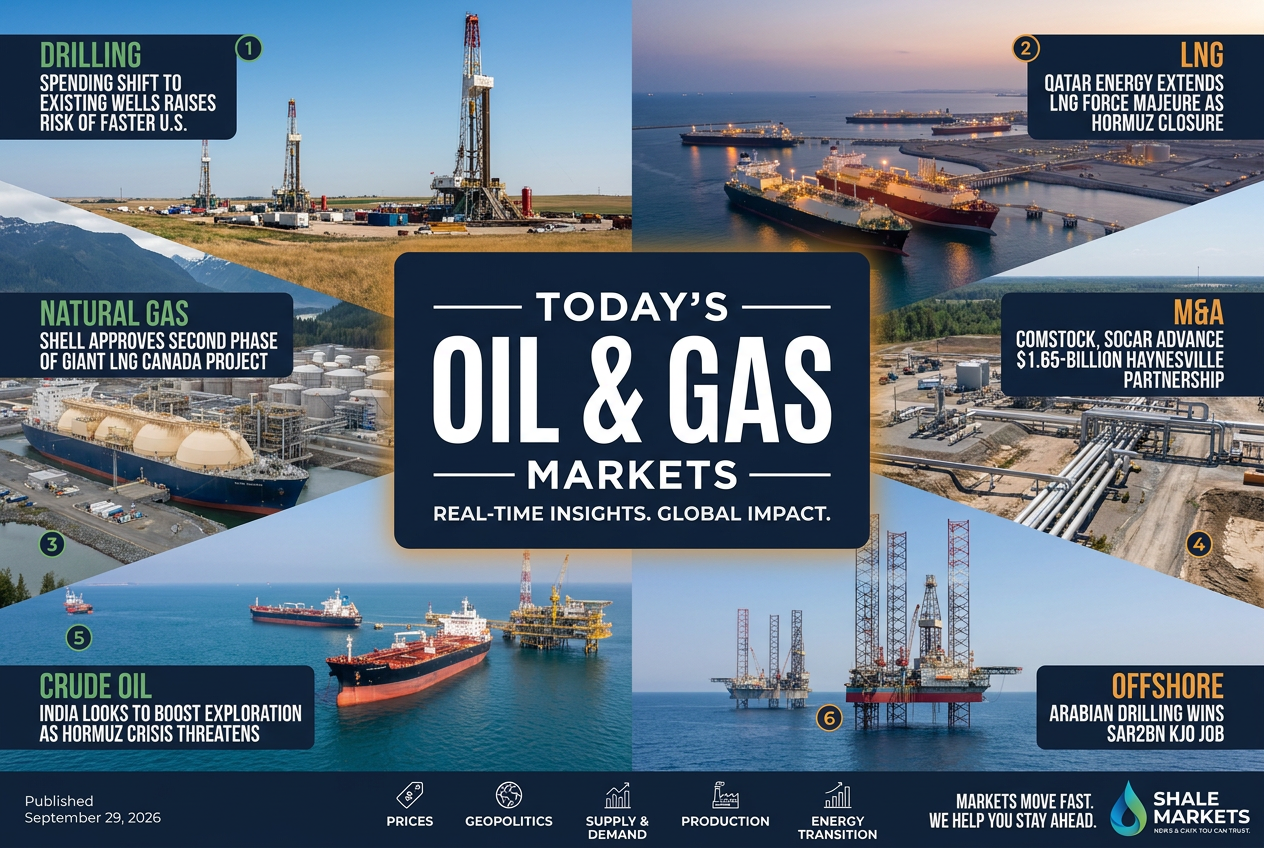
Illustrated summary of the top stories in the Shale Markets Briefing — September 29, 2026 briefing

Monday, August 10, 2026

NNPC says licensing round falls under NUPRC, reports production growth under Ojulari

This signals that Nigeria’s upstream licensing and production trajectory are being managed through the regulator, which matters for how quickly new acreage can be awarded and how credible the country’s output-growth narrative is to investors. For an executive, it points to policy continuity and potential near-term support for supply from one of Africa’s key producing markets.
Sponsored
AI-Driven Interactive Websites

Get the daily briefing

Join oil & gas executives who start their day with Shale Markets.

CES Energy Solutions Posts Record Revenue

This signals that oilfield-service spending is still holding up even as E&Ps remain disciplined, which suggests service providers with strong market share can still expand revenue without a broad-based drilling rebound. For executives, it is a read on where capital is still being spent in the value chain and how resilient service intensity remains in a higher-price but cautious-capex environment.

Sunoco to Buy Offen for $600MM

The deal signals that downstream fuel distribution remains a capital-allocation priority, with buyers willing to pay for scale and route density rather than just exposure to commodity prices. For executives, it suggests continued consolidation in midstream and transportation assets as companies look to strengthen competitive position and create acquisition currency for further bolt-ons.

Sunday, August 9, 2026

Sponsored
Newsletters Automation & Hosting Platform

Murphy Oil Sees Sharp Profit Increase

Higher adjusted earnings show upstream producers can still translate elevated crude prices into cash generation even when volumes and gas realizations are weaker. For executives, that points to continued support for capital discipline and dividend or buyback capacity rather than aggressive growth spending.

U.S. Energy Helps Cushion Global Supply Shock From Hormuz

A disruption in the Strait of Hormuz underscores how U.S. crude and LNG output now function as a strategic buffer for global buyers, which supports investment in export-linked infrastructure and domestic supply growth. For executives, it signals that U.S. barrels and molecules can gain leverage in international pricing and trade flows when overseas supply is disrupted.

Airlines Scramble for Jet Fuel as Hormuz Disruption Drags On

A prolonged disruption in a major global shipping chokepoint is a direct bullish input for refined-product prices and a reminder that supply security can outweigh demand trends. For upstream and midstream executives, it signals stronger pricing leverage for North American barrels and more value in infrastructure that can move or store products away from import bottlenecks.

Saturday, August 8, 2026

Europe Bets Billions on North Africa’s Clean Energy Potential

Europe’s capital is flowing toward import-adjacent clean power rather than additional upstream supply, signaling a longer-term effort to diversify energy sourcing and reduce exposure to gas and power volatility. For oil and gas executives, the implication is slower structural growth in European fossil demand and a stronger competitive position for North African renewables in cross-border energy trade.

Get the daily briefing

Join oil & gas executives who start their day with Shale Markets.

EIA Today in Energy · 6:05 AM

Lower crude oil prices reduced U.S.-Canada energy trade value in 2025

Lower crude prices are shrinking the dollar value of cross-border energy flows even if physical volumes hold up, which signals softer revenue capture for producers, refiners, and pipelines tied to the U.S.-Canada corridor. For executives, it points to tighter export economics and a greater need to protect margins through hedging, freight optimization, or market diversification.

Occidental Beats Expectations for Q2

Higher realized prices are improving cash generation for large upstream names, which can support spending discipline, debt reduction, and shareholder returns even if activity levels do not rise. For executives, this signals that the near-term market still rewards exposure to oil-weighted production and leaves peers with weaker balance sheets more vulnerable on capital access and competitive positioning.
Sponsored
Ray's Gym Tracker

Showing 1026–1050 of 1081