
Today’s Briefing

The latest drilling, deal-flow, and regulatory news across the globe

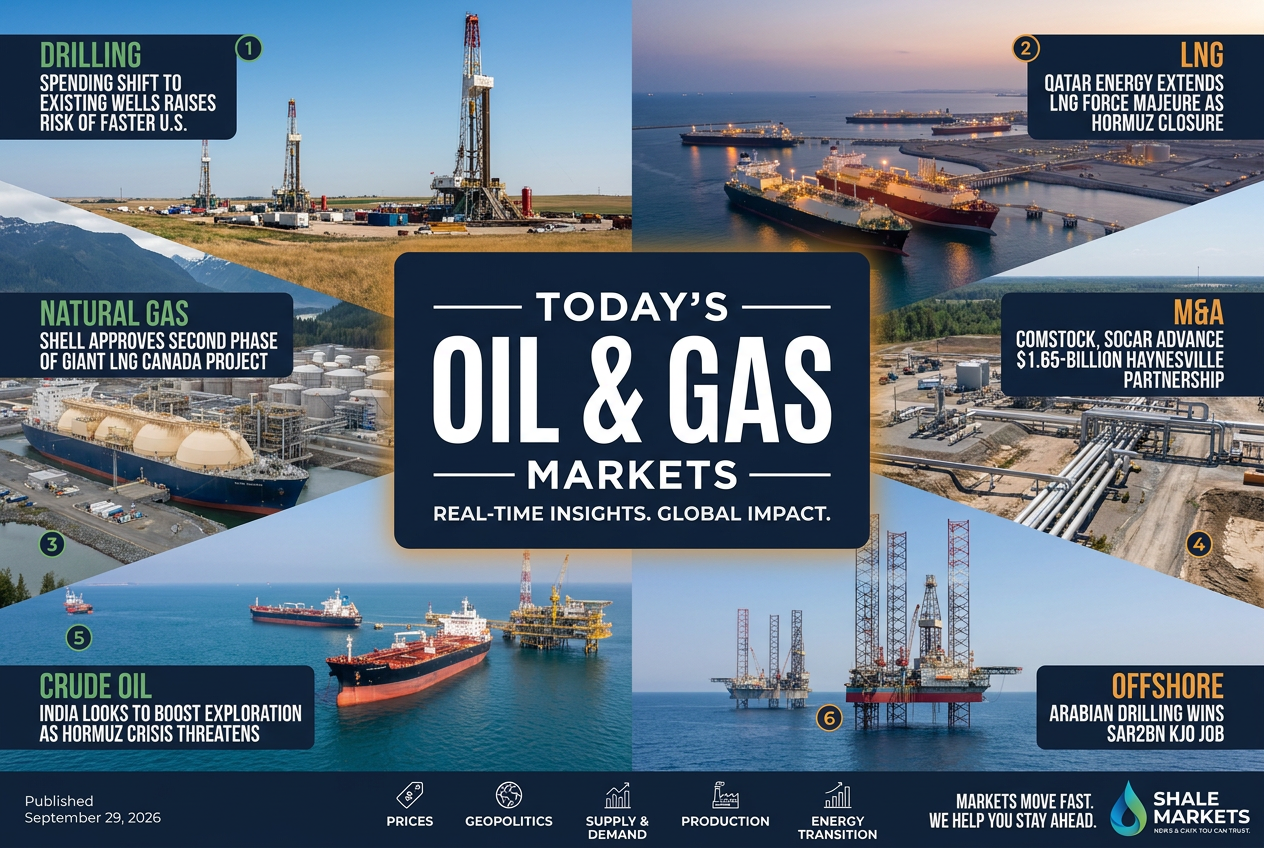
Illustrated summary of the top stories in the Shale Markets Briefing — September 29, 2026 briefing

Sunday, August 9, 2026

U.S. Energy Helps Cushion Global Supply Shock From Hormuz

A disruption in the Strait of Hormuz underscores how U.S. crude and LNG output now function as a strategic buffer for global buyers, which supports investment in export-linked infrastructure and domestic supply growth. For executives, it signals that U.S. barrels and molecules can gain leverage in international pricing and trade flows when overseas supply is disrupted.

Airlines Scramble for Jet Fuel as Hormuz Disruption Drags On

A prolonged disruption in a major global shipping chokepoint is a direct bullish input for refined-product prices and a reminder that supply security can outweigh demand trends. For upstream and midstream executives, it signals stronger pricing leverage for North American barrels and more value in infrastructure that can move or store products away from import bottlenecks.

Murphy Oil Sees Sharp Profit Increase

Higher adjusted earnings show upstream producers can still translate elevated crude prices into cash generation even when volumes and gas realizations are weaker. For executives, that points to continued support for capital discipline and dividend or buyback capacity rather than aggressive growth spending.

Saturday, August 8, 2026

Europe Bets Billions on North Africa’s Clean Energy Potential

Europe’s capital is flowing toward import-adjacent clean power rather than additional upstream supply, signaling a longer-term effort to diversify energy sourcing and reduce exposure to gas and power volatility. For oil and gas executives, the implication is slower structural growth in European fossil demand and a stronger competitive position for North African renewables in cross-border energy trade.
EIA Today in Energy · 6:05 AM

Lower crude oil prices reduced U.S.-Canada energy trade value in 2025

Lower crude prices are shrinking the dollar value of cross-border energy flows even if physical volumes hold up, which signals softer revenue capture for producers, refiners, and pipelines tied to the U.S.-Canada corridor. For executives, it points to tighter export economics and a greater need to protect margins through hedging, freight optimization, or market diversification.

Occidental Beats Expectations for Q2

Higher realized prices are improving cash generation for large upstream names, which can support spending discipline, debt reduction, and shareholder returns even if activity levels do not rise. For executives, this signals that the near-term market still rewards exposure to oil-weighted production and leaves peers with weaker balance sheets more vulnerable on capital access and competitive positioning.
Sponsored
Newsletters Automation & Hosting Platform

Oil Rises as Iran Deal Optimism Fades

This points to a geopolitically driven crude price premium that can quickly affect hedge decisions, spending discipline, and cash flow assumptions across the sector. For executives with exposure to imported barrels or waterborne trade, it underscores how quickly supply-risk headlines can tighten the market even without a fundamental outage.

Get the daily briefing

Join oil & gas executives who start their day with Shale Markets.

JPM Now Expects Fed to Hike Rates in December

A renewed expectation for higher U.S. rates points to a tighter financing backdrop for producers and service companies, which can slow discretionary drilling and make capital markets less forgiving for leveraged names. For oil, the bigger signal is macro: higher rates can pressure demand sentiment and keep a lid on risk appetite across the sector.
RigZone · 6:05 AM

DNO Plans to Pursue Genel Offer despite Rejection

A continued bid effort signals that the buyer sees strategic value in adding reserves or production even after initial resistance, which can keep takeover speculation and asset pricing active in the sector. For executives, it is a reminder that upstream consolidation remains a live path for capital deployment when organic growth opportunities look less attractive.

USA Crude Oil Stocks Rise Week on Week

Higher crude inventories suggest supply is running ahead of near-term demand or refinery runs, which can pressure prompt prices and weaken producer hedging windows. For executives, the signal is more about national market balance than basin-specific activity, and it can temper capital discipline if storage builds persist.
Sponsored
Newsletters Automation & Hosting Platform

US Oil Drillers Add Rigs

A modest increase in oil-directed rigs signals that producers still see enough price and capital discipline to keep adding supply, even as gas activity softens. For executives, the mix suggests oil-focused basins remain the more attractive allocation for near-term drilling budgets and could keep crude supply growth resilient.

Citi Lifts Brent Outlook but Still Sees Oil Falling in 2027

Higher near-term Brent forecasts support producer cash flows and can keep capital budgets from being cut, but the unchanged longer-term view signals this is still being treated as a temporary geopolitical premium rather than a lasting supply reset. For executives, that argues for discipline in hedging and capital allocation because pricing risk remains elevated in the short run while medium-term oil balances may still soften.

Petrobras Profit Tops Estimates

Better-than-expected earnings from a major offshore producer suggest stronger cash generation and can support continued spending discipline, dividend commitments, or selective reinvestment. For executives, it is a read on global upstream margin resilience and a signal that the competitive capital pool remains healthy outside U.S. shale.

Get the daily briefing

Join oil & gas executives who start their day with Shale Markets.

EIA Today in Energy · 6:05 AM

Global liquefied natural gas trade volumes reached record high in 2025

Record LNG trade volume confirms that capital continues to flow toward liquefaction, export terminals, and associated gas supply rather than toward purely domestic demand growth. For U.S. producers and midstream operators, the slower trade pace this year highlights how export-route disruptions can quickly tighten global balances and affect utilization, pricing, and takeaway planning.
EIA Today in Energy · 6:05 AM

Energia Costa Azul, Mexico's second LNG terminal, shipped first cargo

Mexico’s added LNG export capacity tightens the regional supply picture for North American gas and creates another outlet for molecules sourced from U.S. production and pipeline systems. For executives, the Pacific Coast location matters because it improves access to Asian demand and can influence basin netbacks, takeaway planning, and competition for export-linked gas flows.
EIA Today in Energy · 6:05 AM

China's crude oil imports fell in the second quarter

China pulling back on crude imports signals weaker near-term demand support for global benchmarks, which matters for producers and traders watching whether price spikes can hold. For North American executives, it points to a softer international pull on barrels and a more cautious outlook for upstream capital allocation.
Sponsored
AI-Driven Interactive Websites

Phillips 66 Profit Soars

Improving refining margins and higher utilization point to stronger downstream cash generation, which can support capital returns and keep integrated operators leaning into asset optimization rather than production growth. The gain in NGL pipeline and fractionation volumes also signals healthy Gulf Coast and broader liquids infrastructure demand, reinforcing the value of midstream-linked assets in a balanced commodity environment.

Showing 1051–1075 of 1090