
Shale Markets Briefing — September 5, 2026
Saturday, September 5, 2026
Today's briefing brings you 8 stories across drilling, crude oil and exploration from across the global oil and gas market. Leading today: Trump team to fast-track Alaska oil drilling approvals - Washington Times.
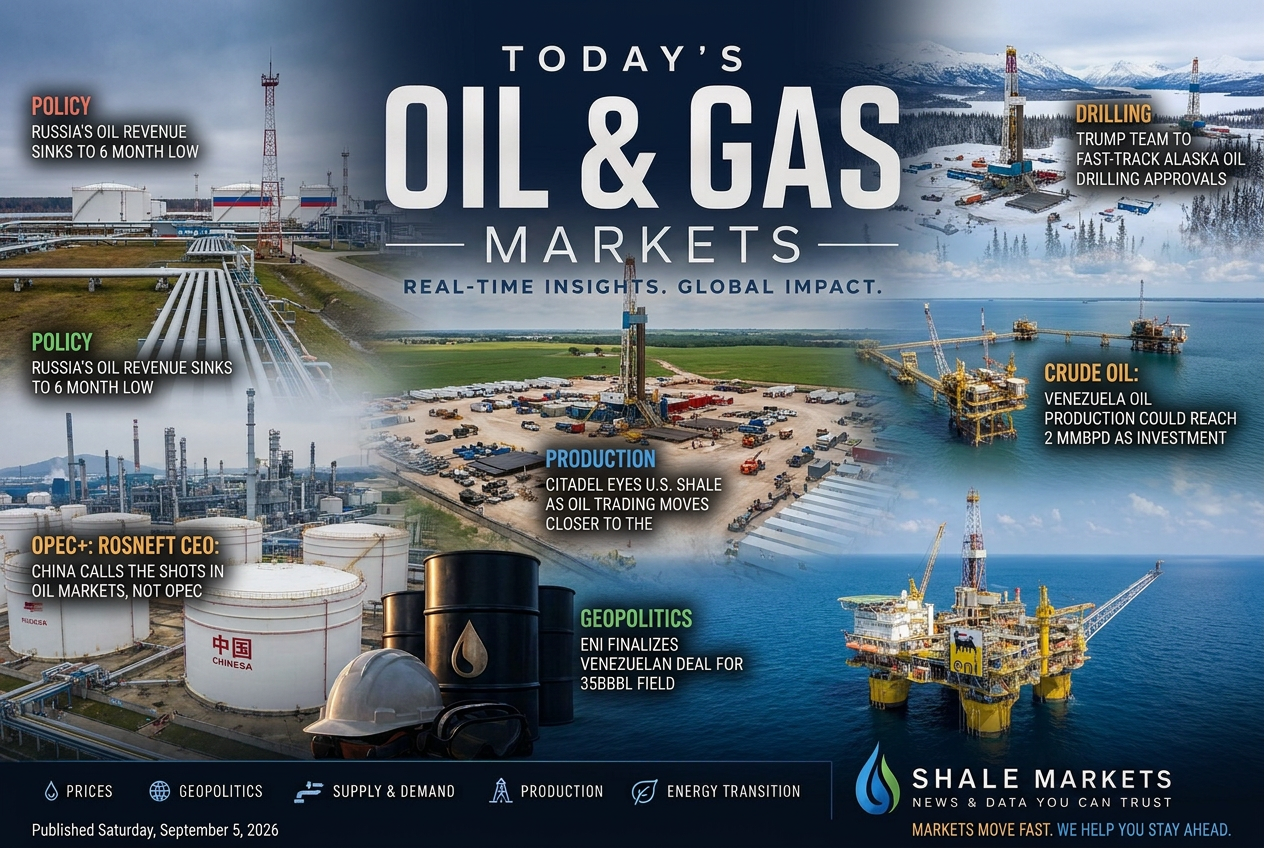
Drilling
A faster permitting path for Alaska drilling would signal a friendlier federal stance toward frontier oil development and could encourage capital back into the state. For operators and service firms, the bigger issue is whether this translates into more near-term acreage bidding and project sanctioning in a high-cost basin.
Washington Times
crude-oil
This points to a possible tightening of Venezuela's upstream constraints if outside capital and operating access continue to improve. For executives, the bigger signal is that international producers may be willing to re-engage, which could add supply from a politically sensitive basin and affect regional crude balance expectations.
World Oil - Latest News
Citadel’s interest in buying shale production assets shows how trading firms are moving further upstream to secure physical barrels and improve control over supply. For executives, that signals continued valuation support for oil-weighted U.S. acreage and more competition for private E&P assets in core shale basins.
OilPrice.com
Lower Russian oil revenue points to weaker cash generation for the state and its producers, which can affect upstream spending, fiscal support, and export strategy. It also signals tighter pressure on the market share and pricing environment for barrels moving out of Russia.
RigZone
China’s crude buying patterns are being described as the main force balancing the market, which matters for executives watching how demand in Asia can outweigh OPEC supply management. If that view holds, capital allocation and trading strategy need to account more for Chinese import behavior and less for cartel discipline.
OilPrice.com
The agreement gives Eni a path to re-enter a large Venezuelan heavy oil asset, which signals some preservation of foreign capital despite the country's political and operational risks. For executives, it points to potential additions to long-dated crude supply from the Orinoco Belt and to renewed competition for access in a constrained market.
RigZone
exploration
The dispute adds political risk to upstream investment around the Falklands, where licensing and financing decisions can be affected by Argentina's stance. For executives, it is a reminder that frontier offshore projects can be slowed or repriced by sovereign pressure even after capital has been committed.
Baird Maritime
Markets
A push to tax oil profits and send rebates to consumers points to renewed political pressure on upstream and downstream margins, even without immediate federal action. Executives should read it as a sign that high energy prices and company windfalls remain vulnerable to regulatory and tax risk in the public debate.
CT News Junkie