
Shale Markets Briefing — September 13, 2026
Sunday, September 13, 2026
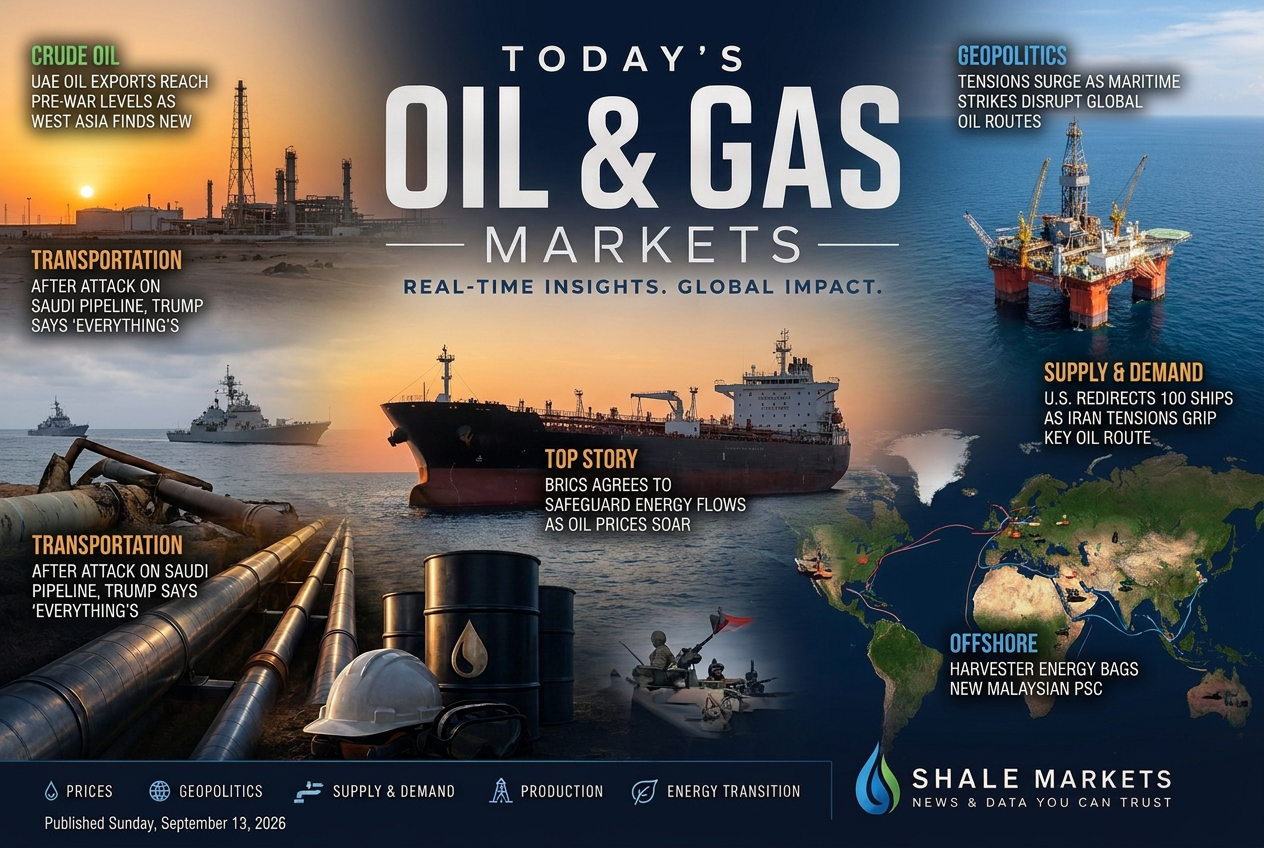
Today's briefing brings you 8 stories across crude oil from across the global oil and gas market. Leading today: UAE Oil Exports Reach Pre-War Levels As West Asia Finds New Routes. Will Brent Crude Prices Fall? - News18.
crude-oil
UAE exports recovering to earlier levels suggests supply disruptions in the Gulf are easing, which matters for producers and traders watching how quickly regional barrels can return to market. The price impact depends on whether those flows add enough export capacity to loosen balances or simply reroute existing supply around risk points.
News18
The piece matters because attacks on Saudi energy infrastructure can quickly affect crude flows and raise the risk premium around Middle East supply routes and tanker movement. For executives, it is a reminder that pipeline security and regional escalation can disrupt exports even when the market reaction is initially calm.
fortune.com
Disruptions to key shipping lanes can quickly tighten crude and product flows, especially for refiners and traders that depend on predictable tanker access. Executives should watch for higher freight costs, rerouted barrels, and a larger security premium on trade through exposed corridors.
Devdiscourse
Rerouting ships away from a threatened choke point raises freight risk and can complicate crude and product flows even before any physical disruption occurs. For operators and traders, it is a signal to reassess exposure to Middle East transit routes, inventory positioning, and alternative supply paths.
Newsweek
The headline points to BRICS members prioritizing continuity of crude and gas supply, which matters because it signals a political push to reduce disruption risk in key trade flows. For executives, that can affect export routes, sanctions exposure, and the balance between secure supply and price volatility.
Mehr News Agency
A new Malaysian PSC signals continued work to commercialize smaller offshore oil resources with a development concept that depends on technology rather than large-scale greenfield spending. For executives, it points to ongoing opportunities in shallow-water Asia-Pacific assets where low-cost execution and subsurface creativity can unlock marginal barrels.
RigZone
This signals that more of Nigeria’s upstream cash generation depends on secure pipelines and other physical infrastructure, not just crude prices. For operators and service firms, tighter protection can support realized production and reduce losses, which affects spending priorities and basin confidence.
Business News Nigeria
Markets
The crackdown matters because tighter internal controls can affect how easily foreign firms, traders, and diplomats operate in Iran, which feeds directly into the risk premium around energy and sanctions exposure. It also signals potential policy instability that executives must factor into any dealings tied to Iranian supply, shipping, or counterparties.
OilPrice.com