Shale Markets Briefing — September 26, 2026
Saturday, September 26, 2026
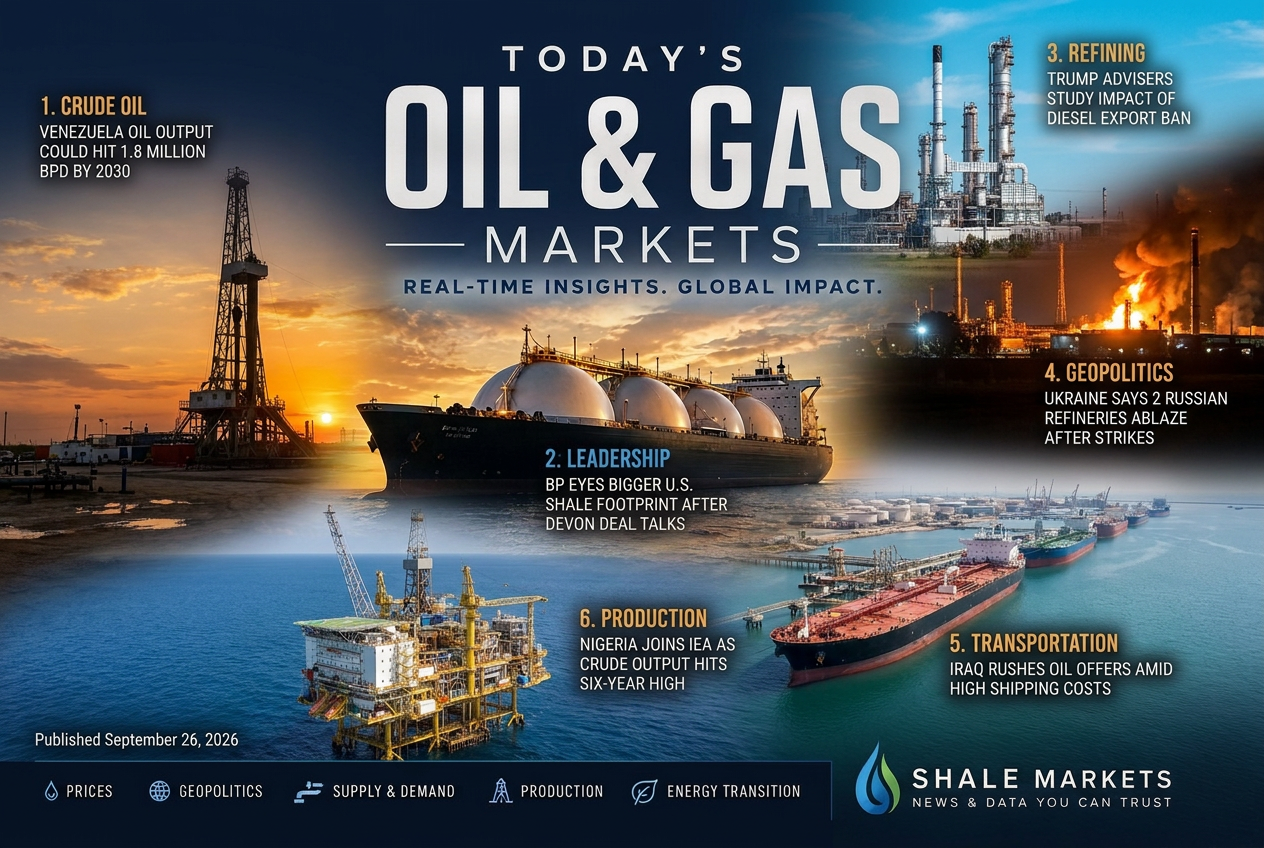
Today's briefing brings you 16 stories across crude oil, refining, drilling and technology from across the global oil and gas market. Leading today: Venezuela Oil Output Could Hit 1.8 Million Bpd By 2030, Rystad Says.
crude-oil
Venezuela’s upstream sector is drawing more international capital and operators, which signals that companies are betting on improved access to reserves and a more workable contract structure. For executives, the key issue is whether services, rigs, and sanctions-related constraints can scale fast enough to turn that interest into meaningful production growth and a more competitive crude supply base.
OilPrice.com
BP’s renewed interest in U.S. shale suggests the company is still willing to reallocate capital toward short-cycle oil growth if the assets fit its portfolio. Even without a deal, Devon’s Eagle Ford package shows South Texas remains a marketable basin where buyers can add production and inventory quickly.
OilPrice.com
Refinery outages in Russia can tighten regional product supply and force rerouting of crude and fuel flows, which matters for margins and logistics even before any longer outage is confirmed. For executives, the bigger signal is that energy infrastructure remains a live target in the conflict, keeping sanctions, shipping, and supply-risk premia elevated.
RigZone
Iraq moving cargoes on short notice signals pressure on its crude marketing strategy and a willingness to trade flexibility for sales execution. For buyers and competitors, higher freight costs can shift where barrels clear and may tighten term supply from the Gulf if shipping economics keep limiting liftings.
RigZone
Nigeria’s higher crude output signals a firmer supply base and more room for the government and national producers to attract capital into upstream expansion. Joining the IEA also gives the country more policy credibility with investors and partners as it tries to balance oil growth with longer-term energy planning.
OilPrice.com
For shale executives, this signals that capital may keep drifting toward gas-weighted positions as mature oil windows face tighter economics and weaker reserve replacement. It also suggests operators with gas exposure could hold a relative advantage in basin ranking, drilling pace, and deal interest if the shale inventory story keeps favoring gas.
Hart Energy
Restarting a damaged crude unit restores throughput at a key Central European refinery and reduces the risk of tighter regional fuel supply if repairs had dragged on. For operators, it is a reminder that unplanned outages at major plants quickly affect crude runs, product output, and near-term maintenance spending.
OGJ - Refining & Processing
refining
A possible diesel export ban would hit refiners, traders, and export logistics first, because it could redirect product into the domestic market and tighten margins tied to Gulf Coast barrels. The fact that advisers are studying the impact signals the administration is weighing a policy that could alter product balances and competitive positioning for U.S. fuel exporters.
RigZone
Drilling
Extending the Jameson Land deadlines keeps Greenland exploration in play while permitting advances, which signals that capital is still being preserved for a frontier basin rather than walked away. For executives, the key issue is whether East Greenland can clear the regulatory and logistical hurdles needed to turn interest into a drillable prospect.
World Oil - Latest News
Canada’s rebound in active rigs points to firmer drilling momentum in a key North American supply basin. For executives, it signals where service demand and near-term upstream spending are strengthening as operators keep pace with the broader rig increase.
OGJ - Drilling & Production
A higher U.S. rig count signals that operators are willing to add drilling activity despite cost pressure and a still-disciplined capital environment. For executives, it is a read on where near-term supply is being rebuilt and how much drilling momentum is returning across U.S. shale.
OilPrice.com
Technology
This signals that cyber risk is now a direct operating issue for Texas oil and gas companies, not just an IT concern. Executives need to harden field, vessel, and pipeline systems because a breach can disrupt movements, expose infrastructure, and raise compliance and continuity costs.
World Oil - Latest News
natural-gas
This shows that hotter weather alone does not guarantee stronger gas prices when other power sources are displacing incremental load. For gas producers and traders, it signals a supply-demand balance that remains soft enough to cap upside even in peak cooling season.
OilPrice.com
This adds another buyer to the gas asset market in two core shale basins, showing that capital is still flowing toward long-life mineral and royalty positions rather than only drilling inventory. For operators and competitors, it reinforces that Appalachia and the Haynesville remain active areas for portfolio reshaping and gas exposure.
RigZone
data-centers
Pembina is signaling that gas infrastructure can be paired with power demand growth, especially where large data centers need reliable low-carbon or lower-emission electricity. For executives, this points to a capital-allocation theme beyond traditional midstream: monetizing gas through integrated power projects and securing a role in emerging industrial load centers.
OGJ - General Interest
production
Colorado is tightening methane rules for producing wells and related equipment, which raises compliance costs for operators and can accelerate replacement of older hardware. It also signals that state-level regulation may become a more durable driver of capital allocation and operating practices if federal standards stay unsettled.
OGJ - General Interest