
Shale Markets Briefing — October 5, 2026
Monday, October 5, 2026
Today's briefing brings you 14 stories across offshore, crude oil, lng and refining from across the global oil and gas market. Leading today: Strike threat looms over North Sea oil supplies as Apache workers reject pay offer - bairdmaritime.com.
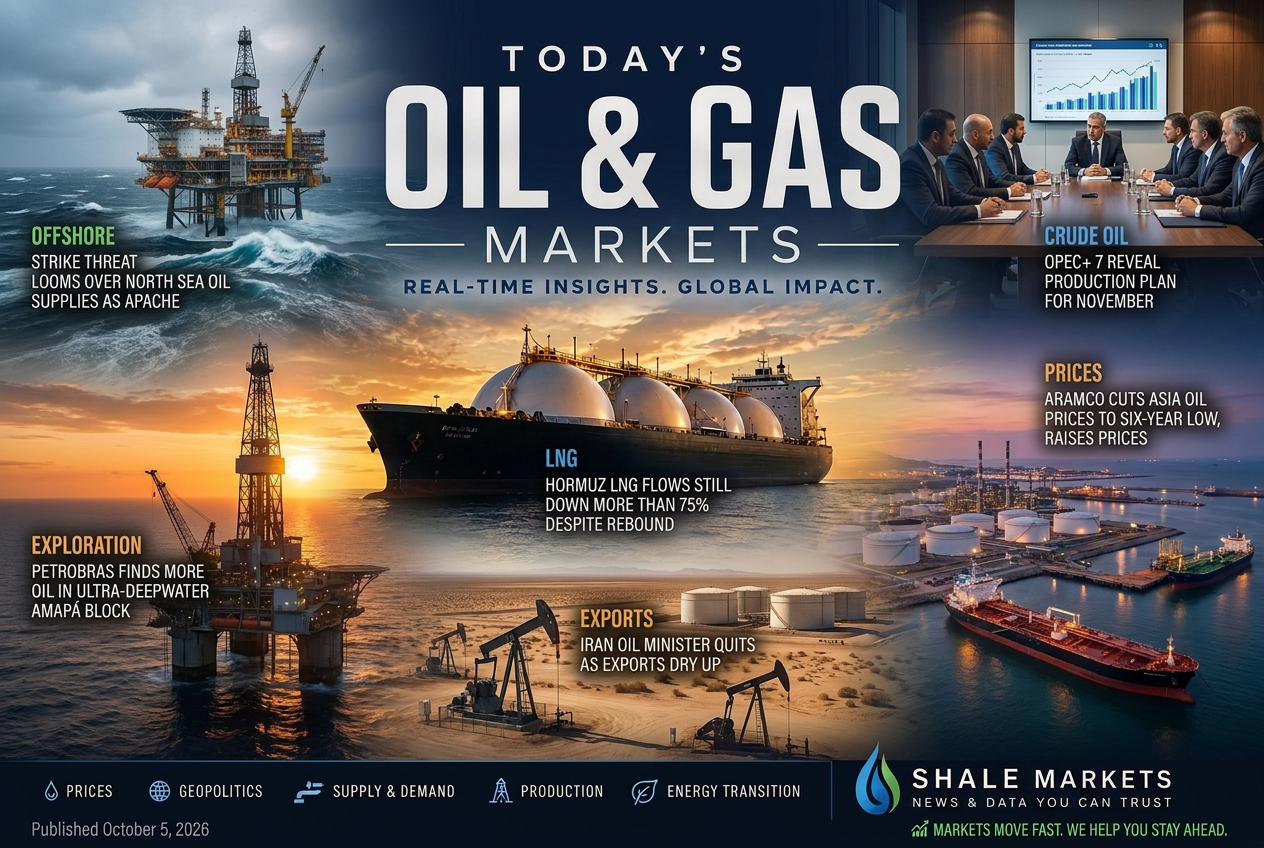
offshore
A labor dispute at Apache threatens North Sea supply at a time when operators are trying to keep offshore output steady. For executives, the issue is less about pay than about whether a local strike can interrupt production, tighten regional balances, and increase operating risk for nearby assets.
bairdmaritime.com
crude-oil
This signals how the core OPEC+ producers are managing near-term supply, which can shape global crude balances and prompt reactions in upstream capital plans. Executives should watch whether the plan points to tighter discipline or more barrels from the group, since that affects pricing power and production strategy across competing basins.
RigZone
This points to continued prospectivity in Petrobras’s deepwater acreage and reinforces the company’s focus on high-impact offshore barrels rather than short-cycle onshore growth. For executives, the signal is that Brazil’s offshore basin can still add reserves and keep capital flowing toward appraisal and development work.
Offshore Engineer Magazine
Iran’s oil leadership change matters because it comes as sanctions pressure continues to constrain exports and force the country to protect cash flow with a tighter export channel. For traders and operators, it signals more risk around Iran’s production discipline, shipping volumes, and the durability of any supply recovery from the country.
RigZone
Aramco’s regional price move signals it is actively defending market share in Asia while extracting more value from Europe, which can shift crude flows and influence refinery economics across both basins. For traders and producers, the cut in Asia points to softer near-term demand or heavier competition there, while the higher Europe pricing suggests tighter alternatives for those barrels.
OilPrice.com
Higher crude prices and firmer refinery margins point to a better pricing environment for producers and refiners, even if some of the move is being driven by geopolitical risk. For executives, that can support upstream cash flow and downstream earnings, while also signaling that supply chains and product balances remain sensitive to Middle East disruptions.
EIA Today in Energy
This is a portfolio reshuffle in a mature offshore basin, and it signals where capital is being recycled rather than deployed. For executives, it highlights that late-life Canadian East Coast assets still have value for buyers willing to take on offshore production exposure.
RigZone
Continued SPR releases keep a federal supply lever in play and signal that Washington is still willing to use inventory management to steady the crude market. For producers and refiners, it can temper near-term price support and shape expectations around replacement supply and future restocking policy.
RigZone
Higher freight and shipping costs are adding a meaningful layer of delivered-cost pressure to oil barrels, which can reshape trade flows and widen the advantage for closer-to-market supply. For producers and traders, it is a reminder that transport economics can matter as much as the outright crude price when competing for refinery demand.
LIGA.net
lng
Persistent weakness in Hormuz LNG flows shows how quickly a security flare-up can tighten seaborne gas supply and disrupt export revenues for producers tied to the corridor. For LNG buyers and shipping interests, even a partial rebound still leaves a large volume at risk and keeps routing and insurance costs elevated.
OilPrice.com
refining
Europe’s diesel supply is tightening from both the export side and policy pressure, which raises the risk of further stress in freight, agriculture, and industrial activity across the region. For refiners, traders, and storage operators, it signals a scramble for middle distillates and could widen the gap between European supply and global product availability.
OilPrice.com
exploration
Buru is moving the Rafael Gas Project into the environmental approval process, which is the first gate for turning a basin concept into sanctioned capital spending. For industry executives, it signals potential new gas supply in the Canning Basin and a test of regulatory timing for upstream development in Australia.
RigZone
Drilling
Keeping the Arctic drilling ban preserves a hard boundary on future upstream access in Europe, limiting optionality for operators that might have looked to the region for frontier reserves. For executives, it reinforces that capital will stay directed toward lower-risk basins and sanctioned development paths rather than high-cost Arctic exploration.
Industrial Info
Stable drilling activity in the U.S. and Oklahoma suggests operators are holding rigs steady rather than accelerating or cutting back. For executives, that points to a cautious capital plan and a basin that is not sending a strong near-term signal on supply growth.
Oklahoma Energy Today