
Shale Markets Briefing — October 12, 2026
Monday, October 12, 2026
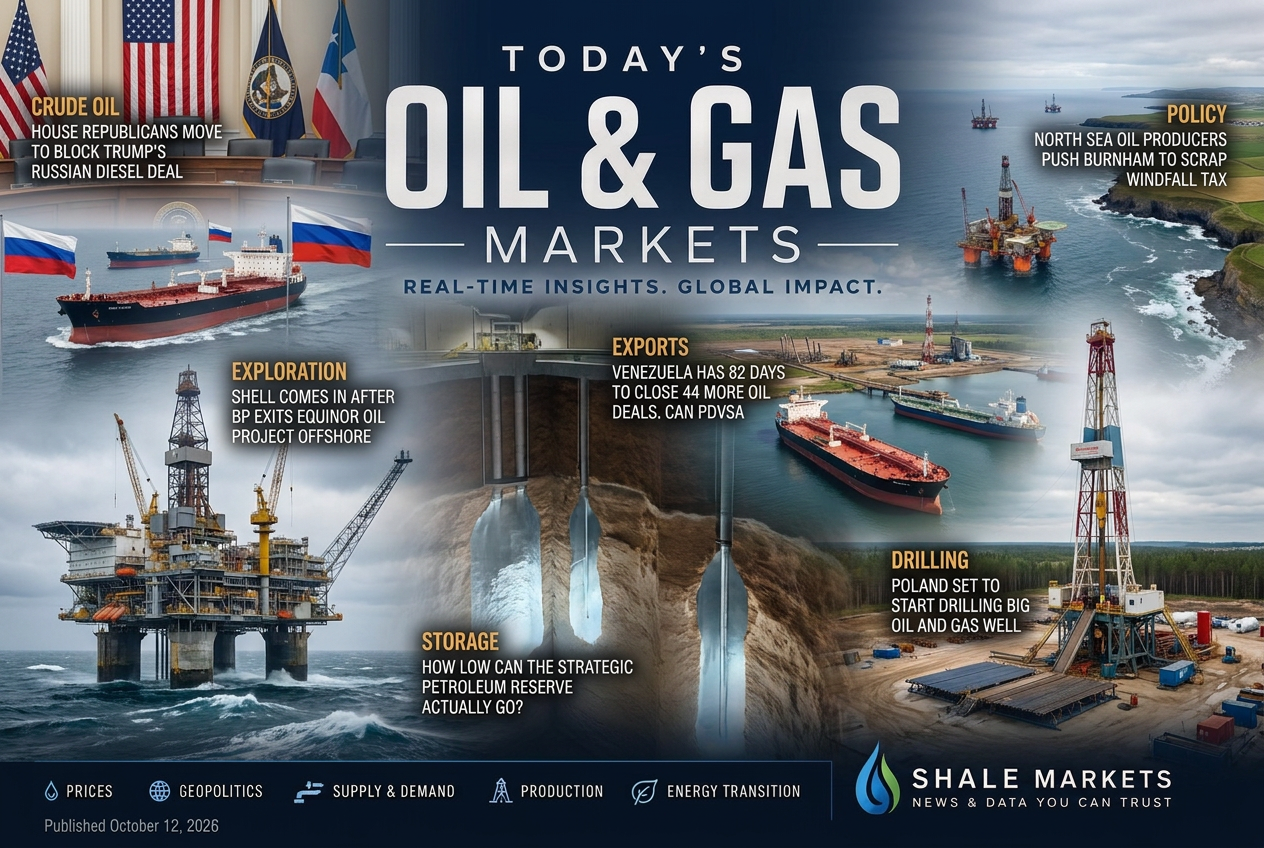
Today's briefing brings you 12 stories across crude oil, exploration, offshore and natural gas from across the global oil and gas market. Leading today: House Republicans Move to Block Trump's Russian Diesel Deal.
crude-oil
This signals that Russian diesel flows remain a live policy risk for refiners, traders, and importers exposed to sanctions compliance and Atlantic Basin product balances. If Congress tightens the rules, it could disrupt trade routes and force buyers to replace barred barrels with other supply, lifting replacement demand elsewhere.
OilPrice.com
The article matters because the SPR is a blunt but important lever for U.S. crude supply security, and a depleted inventory limits Washington’s ability to cushion future outages or price shocks. It also highlights that refilling the reserve will require steady procurement and storage access, which affects Gulf Coast infrastructure and federal buying plans.
OilPrice.com
Venezuela’s push to close more oil deals signals an attempt to turn signed agreements into actual barrels, which matters for anyone tracking supply additions from a sanctioned producer. For executives, the key issue is whether PDVSA can convert paper commitments into sustained output and export flows that could pressure competing crude streams in Latin America and beyond.
Latin Times
The push to scrap the windfall tax signals that North Sea operators are still fighting for a more favorable fiscal regime before committing capital to new projects. For executives, the issue is whether the U.K. will keep deterring frontier and brownfield investment or reset terms enough to sustain basin output and service activity.
OilPrice.com
Poland advancing a large exploration well signals fresh capital being committed to a frontier European basin at a time when operators are still testing remaining resource potential. If the well is successful, it could improve domestic supply prospects and strengthen the case for more drilling and infrastructure spending in the area.
Upstream Online
Afentra’s timing for first oil from Impala-2 signals that the company is still advancing production growth in Angola despite a changed drilling program. For executives, the key point is that project sequencing and rig allocation in Africa can shift quickly, affecting near-term cash flow and the pace of reserve replacement.
finchannel
A projected increase in crude output signals tighter supply from a major producer and can influence how traders and refiners think about future feedstock availability. For operators, it is a reminder that capital is still flowing toward upstream capacity growth and that competitive pressure in crude markets may rise if the ramp materializes.
Nairametrics
exploration
Shell taking BP’s place in Bay du Nord shows the project is still attracting large-scale upstream capital even after a partner exit. For executives, it signals that Equinor is still working to keep the offshore Canada development moving toward a final investment decision, which can influence basin interest and future capital allocation.
RigZone
offshore
Eni is trimming exposure to a portfolio of Indonesian blocks while bringing in Pertamina as a partner, which points to capital recycling and a stronger local operating role in the basin. For executives, the key signal is that the Kutei North Hub development may move faster with a national oil company aligned behind it.
RigZone
natural-gas
Higher-than-average storage heading into the heating season signals Romania has a better cushion against supply disruptions and winter price stress than much of Europe. For gas sellers and infrastructure operators, it points to steadier near-term domestic balance and less urgency for emergency spot procurement.
Agerpres
power
The reported strike on power plants, despite a stated pause on attacks against energy infrastructure, signals that Russia-Ukraine fighting still threatens the reliability of energy assets and the broader operating environment. For executives, the key implication is that geopolitical risk around power and energy infrastructure remains high and can quickly spill into supply, logistics, and regional project planning.
Metro.co.uk
oilfield-services
A weaker oilfield labor market suggests operators are still keeping a tight lid on headcount, which usually points to disciplined spending rather than a broad push to add rigs or crews. For service companies and E&P managers, it can also signal tighter competition for experienced workers as activity levels stabilize.
RigZone