Shale Markets Briefing — August 18, 2026
Tuesday, August 18, 2026
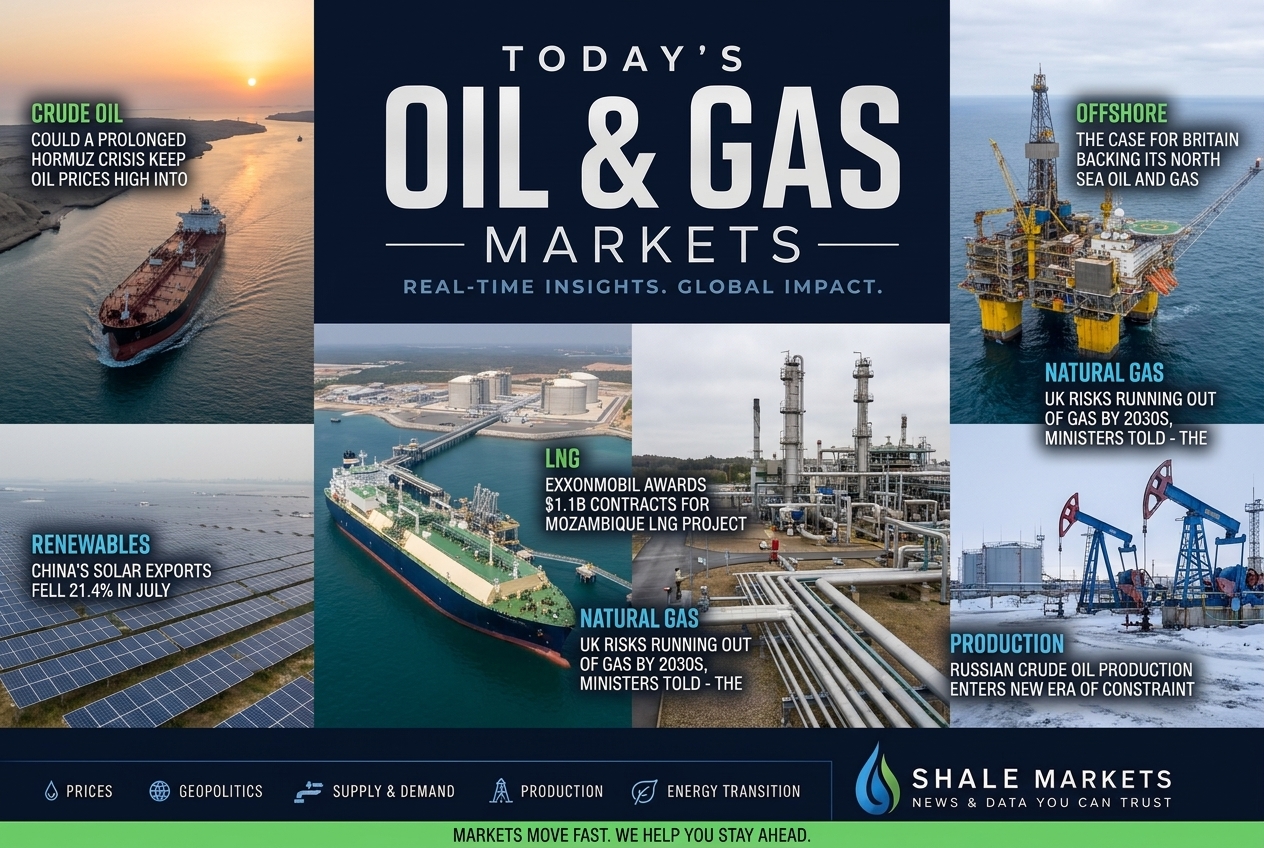
Today's briefing brings you 12 stories across midstream, markets, policy and technology from across North American oil and gas. Leading today: Could a Prolonged Hormuz Crisis Keep Oil Prices High Into 2027? - Modern Diplomacy.
Midstream
A sustained disruption in the Strait of Hormuz would threaten a key global crude transit route, which can keep benchmark prices elevated and widen margins for producers with unhedged supply. For executives, it signals renewed supply-risk premium, stronger incentive to secure logistics and hedging, and potential shifts in capital toward lower-risk barrels and alternative transport routes.
Modern Diplomacy
The contract awards show Exxon is still committing capital to a large LNG buildout in Mozambique even before final investment decision, which signals confidence in long-cycle gas demand and keeps the project visible against competing global LNG supply. For executives, it is a reminder that African LNG remains a strategic battleground for future export capacity and contractor spend.
RigZone
A structural gas shortage risk in a major European market signals tighter demand for imported supply and more value for firms that can secure LNG, storage, or upstream gas exposure. It also points to potential pressure on industrial energy costs and greater policy support for infrastructure and supply-security investments.
The Guardian
Higher tanker earnings signal tighter shipping capacity on a key Gulf-to-Asia crude route, which can lift delivered costs and complicate flow economics for exporters and refiners. For executives, it is a reminder that geopolitics and freight rates can change the competitiveness of Middle East barrels even when crude supply is available.
RigZone
Markets
China’s pullback in solar exports signals softer near-term demand for photovoltaic equipment from the world’s dominant supplier and a potential reset in pricing and shipment flows. For executives, it suggests policy changes in China can quickly affect global solar procurement, margins, and the competitive position of non-Chinese manufacturers.
OilPrice.com
Higher Chinese product exports can pressure regional refined-product margins and keep global diesel balances looser or tighter depending on the pace of domestic stockpile management. For refiners and traders, it signals that China is using exports as a release valve for surplus output, which can shift competitive dynamics across Asia and beyond.
OilPrice.com
Higher oil prices can tighten financial conditions and slow risk appetite across emerging markets, which matters for US producers because it can affect capital availability, currency strength, and demand expectations. A bond selloff also points to broader financing stress that can influence upstream spending and commodity-linked valuations.
Bloomberg
Policy
Britain’s North Sea permitting decisions signal whether capital will stay directed to mature offshore assets or shift away from domestic supply, which affects UK energy security and the cost of replacing production with imports. For operators and service firms, the outcome will shape basin activity, emissions positioning, and the competitiveness of future North Sea investment.
OilPrice.com
Russian output constraints can tighten global crude supply and support prices, which matters for planning procurement, hedging, and exposure to sanctions-driven market shifts. It also signals that capital will remain constrained in a major exporting region, which can alter competitive balance for non-Russian barrels.
RigZone
Technology
Sand erosion can raise operating costs, increase downtime, and force operators to rework completion and production designs, so this kind of technical coverage matters for asset reliability and well performance. It also signals where service providers may find demand for mitigation tools in sand-prone wells.
World Oil - Latest News
Drilling
A weekly rig uptick signals that producers are willing to put capital back to work, which can soften the pace of future supply declines and tighten competition for rigs and crews. For executives, it is a read on near-term drilling appetite and whether activity is broadening enough to change basin-level supply expectations.
RigZone
A cabinet-level visit to a West Texas rig signals continued federal attention on domestic oil production and the policy environment around Permian development. For operators, it can matter for permitting, leasing, and the tone of future regulation, even if it does not change near-term fundamentals.
newswest9.com