The Permian Builds Pipe. Guyana and Brazil Are Building a Permanent Tanker Bill Instead

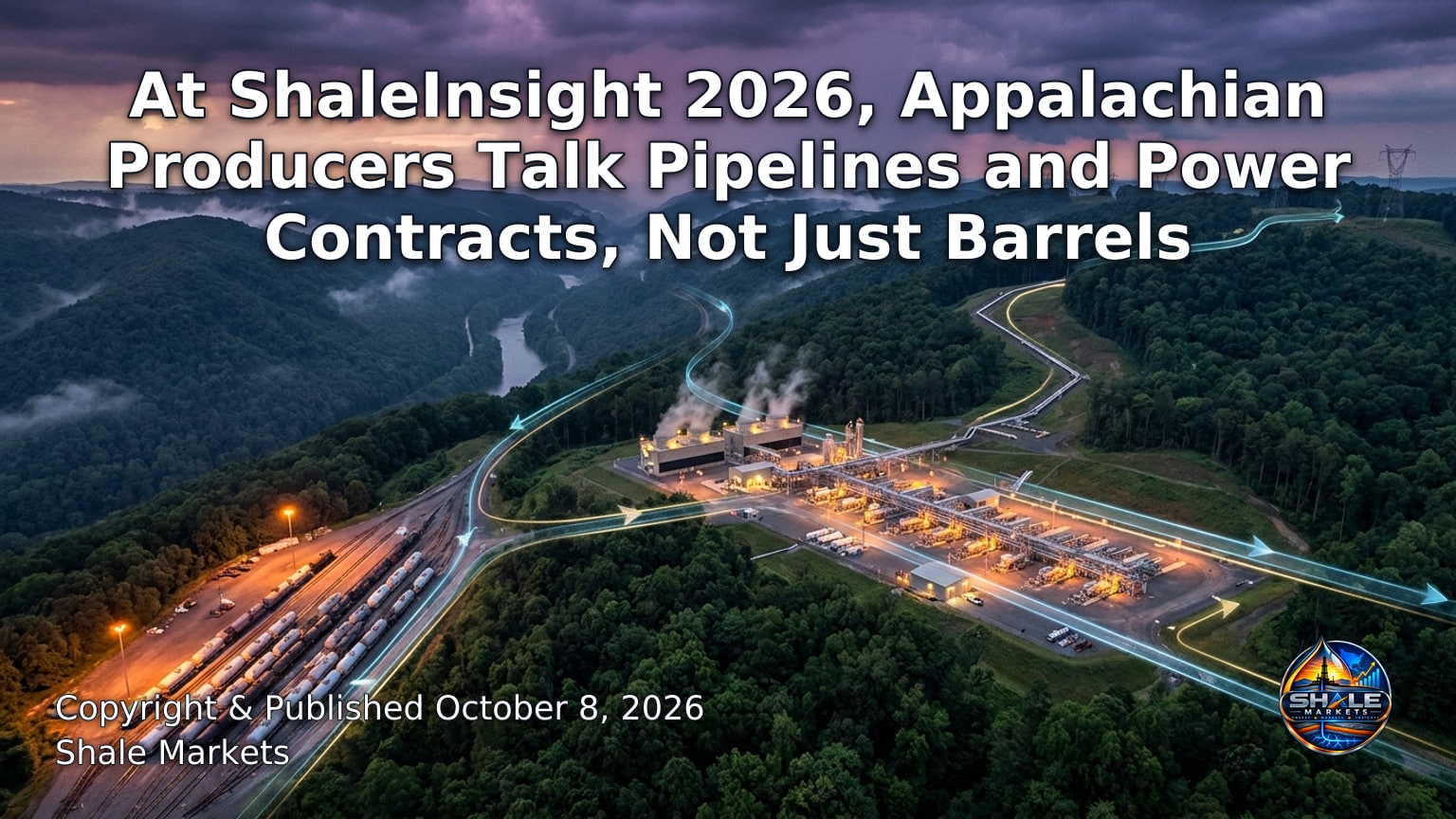
Original illustration created for Shale Markets.

Global Energy Monitor's infrastructure tracker counted 1,634 oil pipeline projects worldwide totaling 487,000 kilometers as of March 23, 2026. The tracker's own framing is blunt: the U.S. Gulf Coast and Permian are still laying dense pipeline grids to protect export dominance, while producers in Guyana, Brazil's pre-salt and offshore West Africa are monetizing reserves through floating production systems that have no land-based transmission network behind them at all. That is not a temporary gap waiting to be closed. It is the permanent shape of those basins' export logistics.
What the Permian built instead
Permian crude output reached 6.6 million barrels per day in 2025, according to the U.S. Energy Information Administration, on the back of what the agency calls a massive expansion in pipeline capacity. Associated gas grew even faster: marketed natural gas production hit 27.6 billion cubic feet per day in 2025, a 60% increase from 2021, driven by rising gas-oil ratios and new midstream buildout, the EIA reported June 18, 2026. Citi analysts, cited by ADVFN on August 31, 2026, describe the basin as entering a fresh multi-year infrastructure cycle, with four newly announced pipeline projects expected to compress Waha Hub differentials through 2030. That figure comes from a single trade aggregator and has not been independently verified against a second source, but the direction is consistent with the EIA capacity data.
The Permian's answer to growth has always been the same: build steel in the ground, move barrels and gas to the coast, and let midstream capex absorb the volume risk. Offshore basins cannot do that.
Guyana's FPSO math
ExxonMobil's 2024 annual report for Guyana, published August 24, 2026, lists three FPSOs already producing there (Liza Destiny, Liza Unity and Prosperity), with combined output near 650,000 barrels per day. Yellowtail is due online later in 2026, with Uaru and Whiptail following in 2026 and 2027, taking total nameplate capacity to 1.3 million barrels per day across six vessels. Every one of those barrels leaves the Stabroek Block on a tanker; there is no pipeline option on the table because none of the water depth or distance from shore supports one economically.
OilNOW reported on June 10, 2026, that Guyana recorded 260 crude liftings across four FPSOs in 2025, with ExxonMobil alone accounting for 102 lifts, up from 88 in 2024. National production exceeded 900,000 barrels per day by the end of 2025. A follow-up OilNOW report on July 21, 2026, put April 2026 output at 903,000 barrels per day and flagged the Uaru project's Errea Wittu FPSO, 250,000 barrels per day of capacity, as the vessel expected to push the country past the one-million-barrel-per-day threshold before the end of 2026. Each of those thresholds is a tanker-scheduling event, not a pipeline commissioning.
Brazil's pre-salt makes the same bet at larger scale
Petrobras approved its 2024-2028+ Strategic Plan on November 23, 2023, committing to 14 new FPSO platforms in that window, with 10 already contracted at the time of the filing. The company is targeting 3.2 million barrels of oil equivalent per day by 2028, with pre-salt fields accounting for 79% of that total. Riviera Maritime Media reported on July 16, 2025, that industry analysts consider pipeline investment in Brazil's offshore fields "too remote and technically challenging" to displace waterborne logistics, and cited Petrobras's order for nine Suezmax shuttle tankers as confirmation of a long-term commitment to moving oil by ship rather than pipe. Ken Research's 2026 FPSO market report, published July 1, 2026, put the global fleet at more than 240 operating units as of 2023, with South America as the principal hub precisely because standardized, high-throughput FPSOs let operators skip fixed export pipelines in remote basins. That figure comes from a single tier-three research firm and should be read as directional rather than precise.
The tanker demand this locks in
S&P Global Commodity Insights reported on August 10, 2026, that International Seaways is expanding its fleet with four new LR1 tankers specifically to capture what the company calls a structural source of tanker demand tied to growing crude production across the Americas, particularly offshore. That phrase matters because it describes a demand floor rather than a cyclical spike. Pipeline capacity can be added incrementally as onshore volumes grow, which is what the Permian's four new pipeline projects are designed to do. FPSO capacity growth in Guyana and Brazil adds barrels that arrive already committed to a vessel, with no substitution path to a fixed line.
The commercial consequence for U.S. midstream operators is narrow but real: they are not competing with Guyana or Brazil for the same barrel of takeaway capex. Guyana and Brazil's growth adds to global waterborne crude volumes and, by extension, to tanker rates and shuttle-tanker order books, without touching Gulf Coast pipeline tariffs or Permian gathering economics directly. For U.S. export terminals on the Gulf Coast, the offshore basins are neither upstream competitors for pipeline capital nor downstream competitors for dock space in the way two Permian-fed export projects would be. They are simply adding tanker-days to the same global fleet that also carries U.S. export barrels, which is one reason shipowners like International Seaways are ordering new tonnage now rather than waiting for a Middle East supply disruption to justify it.
What to watch next
ExxonMobil's Yellowtail startup, expected later in 2026, will be the next test of whether Guyana's FPSO ramp holds to schedule; Uaru's Errea Wittu vessel is the one OilNOW flagged as the trigger for Guyana crossing one million barrels per day before year-end. On the Brazil side, Petrobras's progress against its 10 already-contracted FPSOs, out of the 14 planned through 2028, is the number to track against the company's 3.2 million boe/d target. None of those milestones will show up as a pipeline tariff filing or a Waha differential move. They will show up as tanker liftings, and that is the point.
Sources
This article was reported from the following sources.
Global Oil Infrastructure Tracker — Global Energy Monitor, 2026-03-23
Guyana 2024 Annual Report — ExxonMobil, 2026-08-24
Exxon reports US$8.1 billion in Guyana revenue from 102 oil lifts in 2025 — OilNOW, 2026-06-10
Petrobras approves Strategic Plan 2024-2028+ — Petrobras, 2023-11-23
Permian natural gas production increased faster than crude oil — U.S. Energy Information Administration (EIA), 2026-06-18
International Seaways sees Americas crude growth driving long-haul tanker demand — S&P Global Commodity Insights, 2026-08-10
Brazil, Guyana shape shuttle tanker outlook — Riviera Maritime Media, 2025-07-16
Global FPSO Market Share, Companies & Trends Report 2026-2031 — Ken Research, 2026-07-01
Guyana closes in on one million barrels per day as Uaru start-up approaches — OilNOW, 2026-07-21
All source links verified at time of publish.